
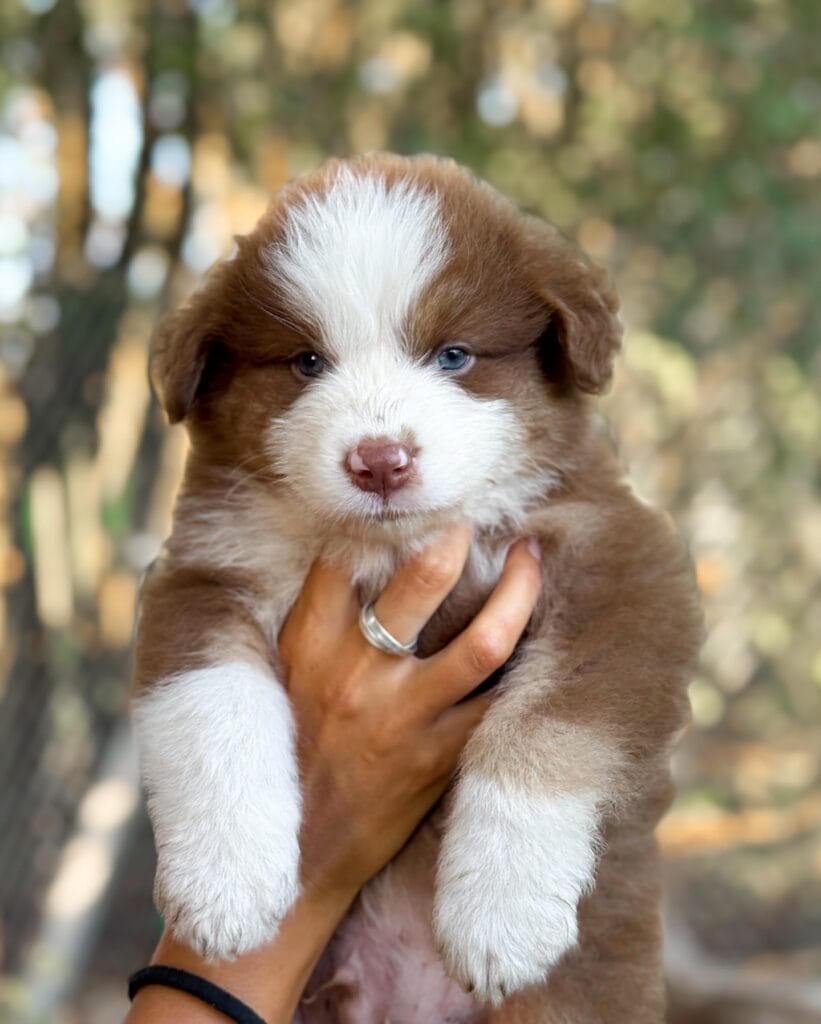
Mini Aussie Size Chart: Adult Weight & Height Expectations (2026 Guide)
Mini Aussie size chart information is one of the first things families look for when considering a Mini or Toy Australian Shepherd. Knowing realistic adult size helps you choose a dog that fits your lifestyle, living space, and family.
This complete guide provides a clear mini aussie size chart, explains the differences between Mini and Toy sizes, and shows what influences final adult weight and height. At Ben Mini Aussie we give every family a projected adult size range for each puppy.
Mini Aussie Size Chart – Official Ranges
Here is a practical mini aussie size chart based on typical adult measurements:
| Category | Height at Shoulder | Typical Adult Weight | Notes |
|---|---|---|---|
| Toy Aussie | Under 14 inches | 10–20 lbs | Smallest size range |
| Small Mini | 14–15.5 inches | 18–25 lbs | Compact Mini |
| Average Mini | 15.5–17 inches | 25–32 lbs | Most common |
| Larger Mini | 17–18 inches | 30–40 lbs | Upper end of Mini range |
These ranges are approximate. Some lines produce more compact dogs; others produce slightly longer or heavier individuals. The mini aussie size chart above gives a reliable starting point.
What Influences Final Adult Size?
Several factors determine how large a puppy will become:
Genetics
The size of the parents and grandparents is the strongest predictor. We carefully select breeding dogs and provide projected adult size ranges based on the specific pairing.
Nutrition
Proper diet during the growth phase supports healthy development. Overfeeding or poor-quality food can affect both size and joint health.
Individual variation
Even within the same litter, puppies can mature at different rates and final sizes. This is normal.
Health and structure
Dogs with sound structure and good overall health tend to develop more predictably.
At Ben Mini Aussie we monitor growth and give families realistic expectations rather than guarantees of exact weight or height. You can review our current breeding dogs on the Mini Aussie Parents Health Tested page.
Growth Timeline: What to Expect
8–12 weeks
Puppies are still small and growing rapidly. Weight can change weekly.
3–6 months
This is a period of fast growth. Many Mini Aussies reach a significant portion of their adult height during this stage.
6–12 months
Growth slows. Most dogs are close to adult height by 10–12 months, though they may continue to fill out.
12–18 months
Final weight and muscle development usually stabilize. Some larger Minis may continue to mature until 18–24 months.
We provide projected adult size ranges with each puppy so you have a clear idea of what to expect from the mini aussie size chart.
Why Size Estimates Matter
Choosing the right size helps with:
- Living space suitability (apartment vs house with yard)
- Exercise requirements
- Handling and travel convenience
- Compatibility with children or other pets
A larger Mini may suit an active outdoor family, while a Toy or smaller Mini often works better in more compact living situations — provided exercise needs are still met.
How We Estimate Size in Our Program
When you inquire about a specific puppy, we share:
- The size of the parents
- Historical size data from previous litters of the same pairing when available
- A projected adult height and weight range
These are educated estimates based on experience, not exact predictions. You can view current available puppies and their projected sizes on the Available Mini Aussie Puppies page.
Mini vs Toy: Practical Size Differences
Beyond the numbers on the mini aussie size chart, the difference in daily life is noticeable.
Larger Minis
- More physical presence
- Often greater stamina
- May feel more substantial when interacting with older children
Toys and smaller Minis
- Easier to pick up and travel with
- May tire slightly sooner
- Can be a better fit for smaller homes when properly exercised
Both sizes share the same intelligent, loyal, and energetic temperament when well-bred and socialized.
Health Considerations Related to Size
Smaller size does not automatically mean fewer health issues. The same orthopedic and genetic testing is important for both Mini and Toy Aussies:
- OFA or PennHIP for hips and elbows
- Annual CAER eye exams
- Full DNA panel
We complete these evaluations on all breeding dogs. For official information on canine health testing standards, visit the Orthopedic Foundation for Animals (OFA).
Frequently Asked Questions – Mini Aussie Size Chart
Can two Mini parents produce a Toy-sized puppy?
Yes. Size can vary within a litter. This is one reason we give projected ranges rather than fixed numbers.
When will I know my puppy’s final size?
Most dogs are close to adult height by 10–12 months. Final weight may continue to develop for several more months.
Do larger Minis need more exercise?
They often have more stamina, but individual energy level matters more than exact size. All Mini and Toy Aussies need daily physical and mental activity.
Is a smaller dog always better with young children?
Not necessarily. Temperament, training, and supervision matter more than size alone. See our guide on Mini Aussie Temperament with Kids for more details.
Final Thoughts on the Mini Aussie Size Chart
Understanding realistic size expectations with a clear mini aussie size chart helps you choose a Mini Aussie or Toy Aussie that fits your home and lifestyle. While genetics provide the strongest guide, individual variation is normal.
At Ben Mini Aussie we focus on health, temperament, and clear communication about projected size so families can make informed decisions. If you would like to see current puppies and their estimated adult ranges, visit the Available Mini Aussie Puppies page.
You can also learn more about our health-tested parents on the Parents Health Tested page, review our process on the How to Reserve a Puppy page, or browse common questions on our FAQ page. We’re happy to discuss size, temperament, and which dogs might suit your family best.