
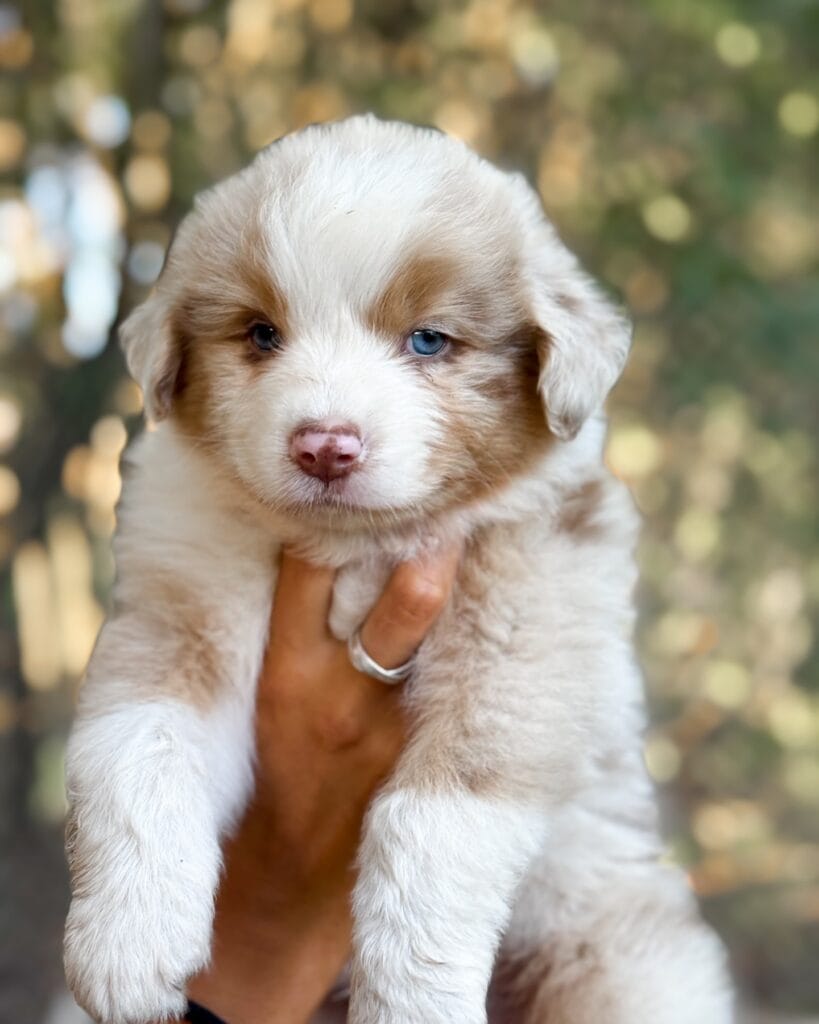
Mini Aussie Temperament with Kids: Are They Good Family Dogs? (2026 Guide)
Mini Aussie temperament with kids is one of the most common questions families ask before bringing home a Mini or Toy Australian Shepherd. Many people fall in love with these dogs because of their intelligence, loyalty, and compact size. But are they truly good with children?
The short answer is yes — when they are properly bred, well-socialized, and raised with clear structure. However, Mini Aussies are not automatically “easy” family dogs. Their herding heritage, high energy, and sensitivity mean that success depends on both the dog’s temperament and the family’s approach. This guide gives an honest look at mini aussie temperament with kids.
Understanding Mini Aussie Temperament with Kids
Mini Australian Shepherds (and Toy Aussies) share the core traits of the larger Australian Shepherd:
- Highly intelligent and trainable
- Loyal and people-oriented
- Energetic and driven
- Alert and sometimes reserved with strangers
- Strong herding instincts
These qualities can make them outstanding family companions, but they also require active involvement from their owners. Understanding mini aussie temperament with kids helps families set realistic expectations.
Strengths of Mini Aussie Temperament with Kids
When well-matched and properly raised, Mini Aussies often excel in family homes for several reasons:
Bonding and loyalty
They form strong attachments and frequently choose to stay close to “their” people, including children.
Trainability
Their intelligence means they can learn household rules, manners around kids, and basic obedience relatively quickly when training is consistent and positive.
Size advantage
Compared with a full-sized Australian Shepherd, the Mini or Toy size is often more manageable for families with younger children.
Playfulness
Most enjoy interactive games and can become wonderful playmates once they understand boundaries.
At Ben Mini Aussie we raise our puppies in the home with children, which gives them early positive exposure to the sounds, movements, and energy of family life. You can see more about our approach on the About Us page and meet the parents on the Mini Aussie Parents Health Tested page.
Potential Challenges with Mini Aussie Temperament with Kids
Honest assessment is important. Common challenges include:
Herding behavior
Some Mini Aussies may try to herd running children by nipping at heels or circling. This is instinct, not aggression, but it must be redirected early.
High energy
A tired Mini Aussie is usually a well-behaved Mini Aussie. Without enough physical and mental exercise, they can become restless or demanding.
Sensitivity
Many are sensitive to tone of voice and rough handling. Loud or chaotic environments can overwhelm some individuals.
Mouthiness as puppies
Like most herding breeds, young Mini Aussies explore with their mouths. Supervision and redirection are essential while they learn bite inhibition.
Age Recommendations for Mini Aussie Temperament with Kids
Toddlers and very young children
Close supervision is required. The combination of a quick, mouthy puppy and an unsteady toddler needs careful management.
School-age children
This is often the sweet spot. Children who can participate in simple training and respect the puppy’s space tend to form excellent relationships.
Teenagers
Many Mini Aussies thrive with active teens who can provide exercise, training, and companionship.
Every puppy is an individual. We take time to discuss your family situation when matching a puppy.
Practical Tips for Success with Mini Aussie Temperament with Kids
- Supervise all interactions – Never leave a young puppy and young children unsupervised.
- Teach children appropriate behavior – Show kids how to pet gently, avoid rough play, and respect the puppy’s crate or quiet space.
- Provide enough exercise and mental work – Daily walks, play sessions, training games, and puzzle toys help channel energy constructively.
- Start training early – Basic cues such as “sit,” “leave it,” and “settle” make daily life much easier.
- Create safe spaces – The crate or a gated area gives the puppy a place to rest undisturbed.
- Manage herding instincts – Interrupt nipping or circling and redirect to a toy. Reward calm behavior around moving children.
How We Prepare Puppies for Family Life
Our puppies are raised underfoot with children and regular household routines. They receive daily handling, early socialization, and the beginnings of crate and potty training before they go home. This foundation helps them adjust more readily to family environments.
You can learn more about the first weeks in our What to Expect When Your Puppy Comes Home guide and review our process on the How to Reserve a Puppy page.
Matching the Right Puppy to Your Family
Not every Mini Aussie is ideal for every home. When you contact us, we ask about:
- Ages of children in the home
- Activity level of the family
- Previous dog experience
- Living situation (house, apartment, yard, etc.)
We use this information, along with our knowledge of each puppy’s developing personality, to suggest the best matches.
Health and Temperament Connection
Stable temperament is influenced by both genetics and environment. We only breed dogs with sound temperaments and complete health testing (OFA/PennHIP, CAER eyes, and full DNA panels). Healthy dogs with good genetic foundations are more likely to handle the ups and downs of family life successfully.
For official information on responsible breeding and health testing, visit the Orthopedic Foundation for Animals (OFA).
Frequently Asked Questions – Mini Aussie Temperament with Kids
Are Mini Aussies good with babies?
They can be, with careful management and supervision. Introductions should be calm and controlled.
Will a Mini Aussie protect my children?
They are typically alert and loyal, but they are not guard dogs in the traditional sense. Their primary instinct is to stay close to their people.
How much exercise does a Mini Aussie need with kids in the home?
Most adults need 60–90 minutes of combined physical and mental activity daily. Puppies need shorter, more frequent sessions.
What if the puppy nips at the kids?
This is common herding behavior in youngsters. Consistent redirection and training usually resolve it.
Final Thoughts on Mini Aussie Temperament with Kids
Mini Aussie temperament with kids can be excellent when their needs for exercise, training, and clear structure are met. Their intelligence and loyalty create deep bonds with children, but success requires active participation from the adults in the home.
If you are considering adding a Mini or Toy Aussie to a family with children, we are happy to discuss current puppies and help determine whether one of our dogs would be a good fit. You can view available puppies on the Available Mini Aussie Puppies page or reach out with questions about temperament and matching.
We’re here to help you make a thoughtful, informed decision. You can also learn more about our program on the About Us page or browse common questions on our FAQ page.